

Football Injury Prevention: A Practical Framework for Coaches
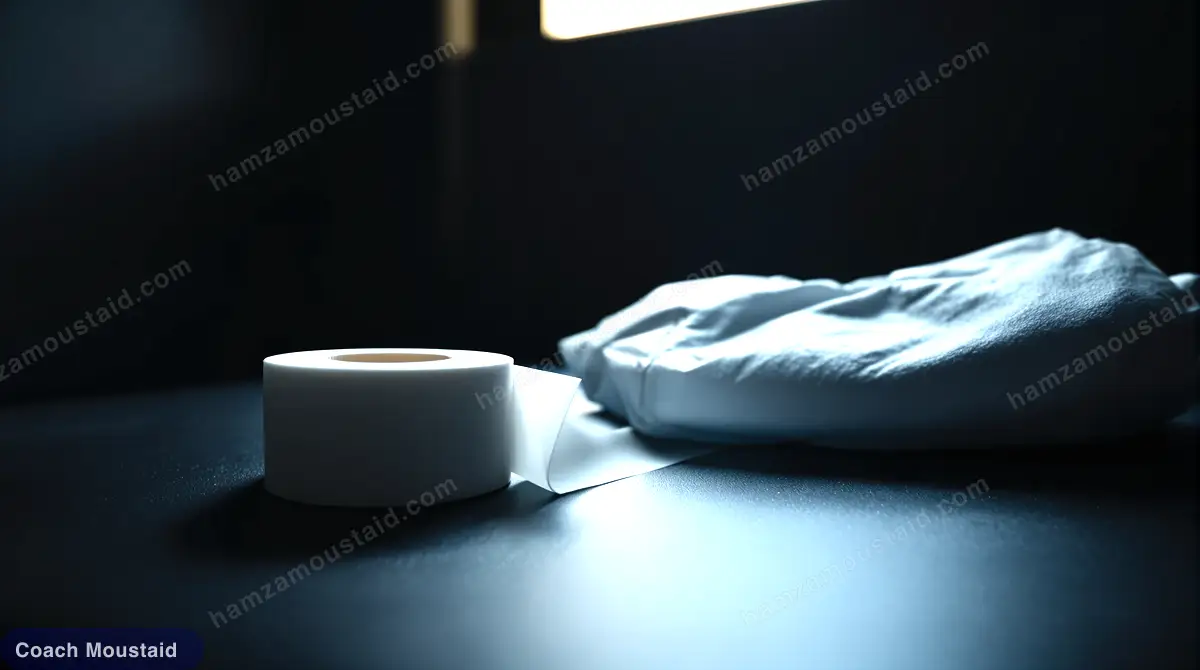
Football injury prevention starts long before a player limps off the pitch. Every team needs a stocked first aid kit, at least one trained first-aider, a known route to the nearest hospital, and up-to-date medical records for each player. When injury does happen, the PRICE protocol guides the first four days. Everything else — load management, warm-ups, honest return-to-play decisions — sits on top of those foundations.
Injuries are inevitable — poor handling is not
Football is a collision sport played at speed on unpredictable surfaces. Sprains, strains, knocks and contusions will happen at every level, from under-9s to senior amateurs. No coach can promise a season without injuries, and any coach who does is misleading their players' parents.
What you can control is everything around the injury: whether it is spotted early, whether the first ten minutes of care are correct, whether the player is rushed back too soon, and whether the same injury keeps recurring because nothing in the training week changed. That is where football injury prevention actually lives — in organisation and habit, not in equipment budgets.
Treat player health as a standing item in your planning, alongside tactics and technique. It belongs in the same conversation as your coaching philosophy: how you handle a hurt fourteen-year-old tells the squad more about your values than any team talk.
The four non-negotiables for every team
Whatever your level, these four conditions create a safe environment. If any one is missing, fix it this week.
1. A stocked, checked first aid kit
The kit exists to stop small problems becoming big ones and to prevent delay in the cases where minutes matter. A basic pitchside kit generally includes:
- Sterile dressings, gauze and adhesive plasters in several sizes
- Elastic and cohesive bandages for compression and support
- Antiseptic wipes and saline for cleaning wounds
- Disposable gloves — always, for every intervention
- Instant cold packs or a cool bag with ice, plus cloth to wrap it
- Scissors, tape, tweezers, a foil blanket
- A note pad or app to record what happened and what you did
Check the kit monthly and after every match where you used it. Expiry dates matter. Confirm the exact required contents with your club, league or national federation, since requirements differ between competitions and age groups — do not assume a list you found online is the standard where you coach.
2. At least one trained first-aider present
A kit is useless without someone who knows how to use it. Every session and every match should have at least one person on site with current first aid training — ideally including basic life support and recognition of concussion and head injury. If your club cannot fund a physiotherapist, fund a course for an assistant coach or a committed parent.
Coaches should not be diagnosing injuries. Your job is to recognise danger signs, stabilise, and refer. Knowing the limits of your competence is a professional quality, not a weakness — much like the honesty required in handling difficult situations generally.
3. A known route to medical care
Before the first session of the season, write down the nearest hospital or clinic with an emergency department, its address, its phone number and the driving route. Add the local emergency number and the location of the nearest accessible vehicle entrance to your training ground. Share it with every member of staff.
In a serious injury, the difference between a calm response and a chaotic one is usually five minutes of preparation done weeks earlier. Also agree in advance who calls the emergency services, who calls the parents, and who stays with the rest of the squad.
4. Medical and injury records for every player
Keep a simple record for each player containing:
- Previous injuries, surgeries and how long each took to resolve
- Chronic conditions — asthma, diabetes, epilepsy, cardiac history
- Allergies, including to medication
- Current medication
- Emergency contact details and consent for treatment for minors
This information speeds up assessment enormously. A medic who knows a player has torn the same hamstring twice reaches a working diagnosis far faster. Store the records securely and share them only with people who need them, in line with the data protection rules that apply where you work.
PRICE: the first four days after a common injury
For the everyday soft-tissue injuries of football — ankle sprains, muscle strains, dead legs — a widely taught protocol for the first 24 to 96 hours is PRICE. It is guidance for immediate management, not a substitute for assessment.
| Letter | Meaning | What to do |
|---|---|---|
| P | Protection | Stop the session immediately. Protect the injured area from further load or impact. Do not let the player "run it off". |
| R | Rest | Take the rest days the injury and the practitioner's advice require, giving the body space to heal. |
| I | Ice | Apply ice for 10–15 minutes, two to three times a day. Never directly on skin — wrap it in a cloth. |
| C | Compression | Apply a bandage to compress and support the area, limiting swelling and reducing pain. Firm, not tight enough to numb or discolour the limb. |
| E | Elevation | Raise the injured area towards heart level to help circulation and reduce swelling and pain. |
Alongside PRICE, remember what to avoid in the first 48–72 hours: heat, alcohol, running and deep massage. All of them can increase bleeding and swelling in fresh tissue.
Some more recent frameworks extend this thinking (adding education and gradual loading after the acute phase). The principle is unchanged: protect early, then load progressively under guidance.
Red flags: when it stops being your decision
Refer immediately, and do not allow the player to continue, if you see any of the following:
- Any suspected head injury, loss of consciousness, confusion, memory loss, vomiting or visual disturbance
- Obvious deformity, inability to bear weight, or a joint that will not move
- Audible pop or snap at the moment of injury
- Rapid, severe swelling
- Numbness, pins and needles, or a cold, pale limb
- Chest pain, breathing difficulty or collapse
On head injuries the rule across the game is simple and absolute: if in doubt, sit them out. Return only after clearance following the protocol used by your federation or competition.
Prevention inside the training week
Good first aid is damage limitation. Reducing the number of injuries is a coaching job, and it happens in how you build sessions.
Warm up with purpose
A structured warm-up that raises temperature, activates the hips, hamstrings, calves and glutes, and includes controlled change of direction and progressive sprinting is the single most evidence-supported prevention measure in football. Neuromuscular programmes built around this idea have consistently reduced injury rates in youth and amateur football. Build it into your standard session structure rather than treating it as optional pre-match ritual.
Manage load, not just intensity
- Avoid sudden spikes — a jump from two sessions a week to five plus a tournament is a predictable injury cluster
- Plan hard and easy days rather than back-to-back maximal sessions
- Watch players in multiple teams: school, club and district loads add up and nobody is counting them but you
- Respect growth phases in adolescents, when knees, heels and hips are especially vulnerable
Build strength and eccentric capacity
Age-appropriate strength work — hamstring eccentrics, calf work, hip and trunk control, single-leg balance — protects players. It does not require a gym. Bodyweight progressions done consistently twice a week beat sophisticated programmes done occasionally.
Check the environment
Walk the pitch before every session: holes, stones, glass, unstable goals, standing water, exposed sprinkler heads. Check studs and shin pads. Adjust for heat, cold and hydration. These two minutes prevent avoidable injuries.
Return to play without setbacks
Most re-injuries come from returning too early or returning without progression. Use a staged pathway, and only move a player up a stage when they complete the current one without pain or swelling:
- Pain-free daily movement and full range of motion
- Straight-line jogging, then running
- Change of direction, deceleration, jumping and landing
- Football-specific work — passing, striking, duels at controlled intensity
- Full non-contact training
- Full contact training, then partial match minutes
Do not let league position, a parent, or the player's own frustration compress this pathway. Resisting that pressure is a test of emotional control as much as sports science. A player who misses three weeks properly plays the rest of the season; a player rushed back in ten days often misses three months.
Communicating with players and parents
Record every incident: date, mechanism, what you observed, what you did, who you referred to, what you were told. Communicate clearly with parents on the same day for any injury involving a minor. Never give a diagnosis or recommend medication you are not qualified to prescribe — describe what happened and refer.
Educate the squad too. Players who understand why they warm up, why they report niggles early, and why hiding pain costs them games become partners in prevention rather than obstacles to it.
Keep learning
Injury management is a coaching competency, and it appears in most coaching syllabuses. If you are building your qualifications, check what your national body requires — for example, the pathway for obtaining a coaching licence in Morocco — and supplement it with reputable free online coaching certificates. Confirm any first aid certification requirement directly with your club, league or federation, as it varies by country and competition.
Above all: consult a doctor or qualified practitioner for any severe case or any injury that is not improving, respect recovery timelines, and treat health as the priority it is. Tactics can wait a week. A knee cannot.
Frequently asked questions
What should be in a pitchside first aid kit?
How long should I apply ice to an injury?
Does PRICE replace seeing a doctor?
What is the single most effective injury prevention measure in football?
How do I decide when a player is ready to return?
What do I do if I suspect a concussion?
Related reading

How to Get a Football Trial: A Practical Guide for Players and Coaches
A step-by-step guide to finding and winning football trials: where trials are advertised, how to contact clubs, what belongs in a football CV, and how to prepare so you perform when the chance arrives.

Football Player Lifestyle Habits: How Bad Routines Quietly Wreck Performance (And How to Change Them)
Sleep, screens, food and recovery routines run on autopilot for most players. Here is how habit loops actually work, why negative habits damage output before anyone notices, and a practical replacement method coaches can run with a squad.

Youth Football Nutrition and the Four Pillars of Player Health
Nutrition, movement, sleep and mindset decide how much a young player gets out of training. A practical guide for coaches on teaching all four — and living them.