

Coaching Under Pressure in Football: How to Control Your Emotions and Reactions on the Touchline
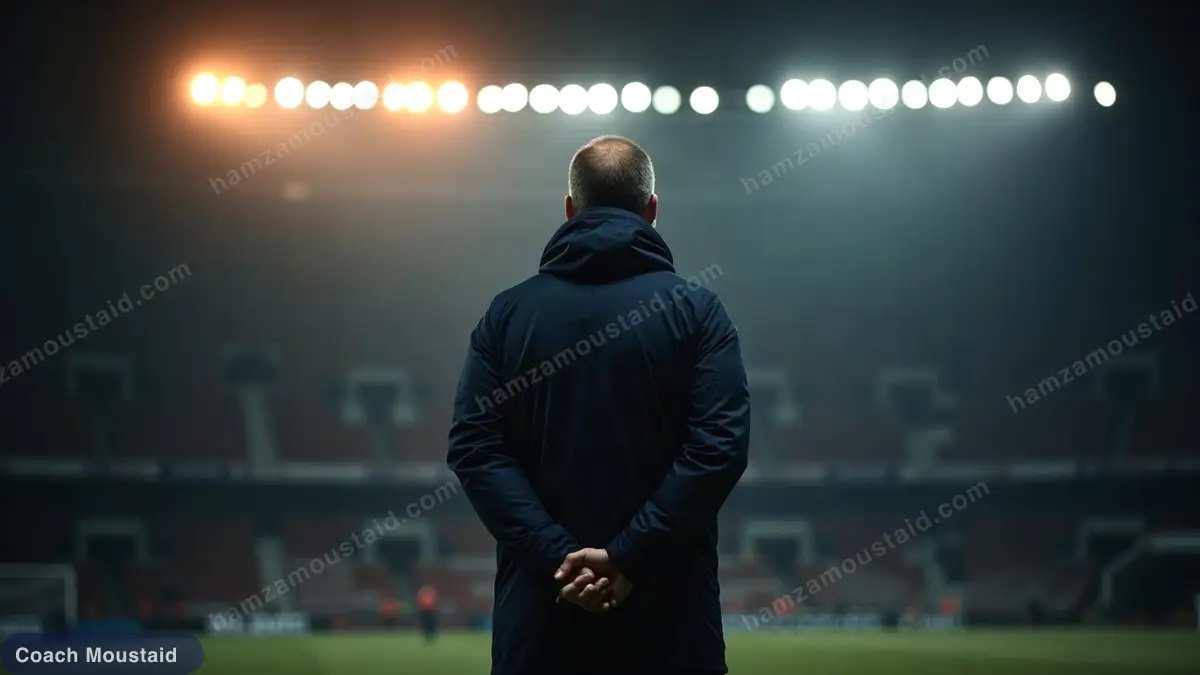
Coaching under pressure in football means managing your own emotions before you manage anyone else's. Players copy what they see, so a calm, consistent coach creates a safe environment where mistakes become learning. Build routines for the touchline, adjust your expectations by age group, and always understand a player before correcting them.
Why your reactions matter more than your instructions
Every session and every match is a live demonstration of how to behave when things go wrong. A midfielder loses the ball in a dangerous area, the opposition score, a parent shouts something from behind the fence — and thirteen pairs of eyes turn to the technical area to see how you handle it. That single moment teaches more than a week of talking about mentality.
If the answer they see is a coach shouting, throwing his arms up or blaming an individual, they learn that mistakes are dangerous. Players who believe mistakes are dangerous stop taking risks. They pass backwards, they hide behind opponents, they wait for permission. Your technical work in training gets cancelled out by your emotional work on Saturday.
If the answer they see is a coach who stays composed, gives one clear instruction and moves on, they learn that mistakes are part of playing. That is the environment in which players actually develop.
The three things your environment has to deliver
Before any tactical detail, judge your own coaching against three simple standards. Everything else is built on them.
- Safety and comfort. Players need to know they will not be humiliated for trying something and failing. Psychological safety is not softness — it is the precondition for competitive risk-taking.
- Genuine support for development. Every player should be able to name one thing they are currently working on and know that you are helping them with it.
- Intrinsic desire to be there. Players should want to come to training, not feel obliged to. The moment attendance becomes duty, you lose the group and your influence with it.
You cannot deliver any of the three unless you are the example. That is the real foundation of coaching authority, and it is why so much of the work is on yourself rather than on the players. If you want to go deeper on that, our piece on the qualities of a successful football coach covers the wider picture.
Enjoyment is a performance variable, not a luxury
Coaches often treat enjoyment as something for the younger age groups and discipline as something for the older ones. In practice, players who are not enjoying their football are harder to coach at every level. They stop listening, they need constant policing, and the session becomes a battle for attention rather than a training stimulus.
The practical fix is usually in the design of the session, not in the volume of your voice. Sessions with too much queuing, too much talking and too little ball contact create the boredom that then creates the discipline problem you end up shouting about. Our guide to organising an effective training session is a useful checklist here: high ball-rolling time, clear game-related pictures, short and specific interventions.
Match day: supporting players instead of controlling them
Match day is where pressure is highest and where your habits are exposed. Three commitments make the biggest difference.
1. Treat mistakes as normal and useful
Decide in advance which mistakes you will not react to at all. A striker who mistimes a run while trying to get in behind is making the mistake you asked for. A defender who plays out under pressure and loses it in your own third is executing your instruction imperfectly. Correct the execution at half-time or on Monday — not with an immediate public reaction that teaches the whole team never to try it again.
2. Leave real decisions to the players
Constant commentary from the touchline creates players who look at the coach instead of the game. Give the framework in the week, then let them solve the problems inside it. Coaching decision-making rather than dictating decisions is a philosophical choice as much as a tactical one, and it is closely linked to how you build your playing style and your coaching philosophy.
3. Control your own behaviour first
Have a routine. Mine is deliberately mechanical: stay seated for the first ten seconds after a goal is conceded, note what caused it rather than who, then choose one message for one player. Ten seconds is enough to stop a reaction becoming a response you regret.
Other habits that work in real match conditions:
- Use names, never labels. "Karim, drop five metres" — not "what are you doing?"
- One instruction at a time. Under pressure, players can process one cue, not three.
- Save the analysis. Anything longer than a sentence belongs at half-time.
- Never argue with officials or spectators. Your players will mirror it within minutes.
- Debrief yourself after the game: which of my reactions helped the team, and which one served only me?
What to expect from each age group
Pressure feels different at every stage, and so does the coaching response. The table below is a practical guide to priorities — adapt it to your own league's structure and to the individuals in front of you.
| Age group | Main priority | How to handle pressure |
|---|---|---|
| 5–11 | Enjoyment and ball mastery | Stay positive, ignore most errors, invest your energy in making practices fun and busy |
| 12–16 | Patience through adolescence | The hardest group. Expect mood swings and uneven physical development; give time, avoid public criticism, deal with issues individually |
| 17–21 | Transition to senior football | Winning starts to matter, but keep individual development plans running for every player |
| Senior | Knowing your players as people | Understand what is happening on and off the pitch; lift individuals and the group together to get results |
5 to 11 years old
Nothing you win at this stage matters. What matters is whether the player still wants to play at fourteen. Correct less, encourage more, and design practices where every child touches the ball constantly.
12 to 16 years old
This is the age group where coaches lose players. Bodies change at different rates, confidence collapses and rebuilds weekly, and a sharp comment in front of teammates can end a relationship. Handle this group with care and intelligence, and give them the time they need.
17 to 21 years old
The direct gateway to senior football. Results now carry weight, and players need to learn to handle competitive pressure — but not at the cost of development. Keep working with each player on the specific weakness that would stop them making the step up. Many will also be chasing opportunities elsewhere; our guide on finding clubs for trials is worth sharing with them.
Senior football
Here the job is largely human. Work, family, finances and confidence all arrive at training with the player. Know your squad well enough to understand who needs a challenge and who needs support this week — that knowledge is what turns eleven individuals into a team that produces results.
Understand first, then act
The order matters. Observe the reaction, work out what caused it, then decide on your response. Most touchline mistakes come from reversing that sequence — reacting first and understanding afterwards, once the damage is public.
Empathy is the tool that makes this possible. A player who is late, sulking or refusing to press usually has a reason, and it is rarely disrespect. Ask before you sanction. For the harder cases, see handling difficult situations as a person first and a coach second.
Look after yourself, or none of this holds
Emotional control is a physical capacity. Sleep debt, poor nutrition and unmanaged stress all shorten your fuse, and the touchline will find it. Treating your own condition as part of the job is not indulgence — it is the maintenance that keeps your standards consistent across a long season, as covered in staying in peak mental and physical condition as a coach.
Formal education helps too, because most modern coaching syllabuses now include significant work on communication, safeguarding and player psychology. If you are looking at qualifications, check the current requirements and costs directly with your national federation, as they change from season to season. For coaches in Morocco, see our overview of how to obtain a coaching licence; for a low-cost starting point, there are also free online coaching certificates worth completing while you wait for a course place.
A simple self-check
- Did my players look at me for permission today, or did they solve problems themselves?
- Which mistakes did I react to, and were any of them mistakes I had asked for?
- Did I speak to any player in a way I would not accept from another adult towards my own child?
- Did anyone leave training wanting to come back?
Answer those four honestly after every session and your ability to coach under pressure will improve faster than through any tactical study. Work hard, be the example, understand people before you address problems, and think before you react.
Frequently asked questions
How do I stay calm on the touchline when we are losing?
Is shouting at players ever justified?
Which age group is hardest to coach under pressure?
How do I let players make decisions without losing control of the game plan?
Do coaching qualifications actually help with emotional control?
What should I do if I lose my temper with a player?
Related reading
Dealing With Difficult Players: A Coach's Practical Framework
A practical framework for dealing with difficult players: control your reaction, rehearse scenarios, separate behaviour from character, and turn every conflict into a standard the whole squad understands.
How to Develop Your Coaching Philosophy in Football
Your coaching philosophy is far more than a formation. Here is a practical, step-by-step process for defining what you stand for, writing it down, and living it every day on the training ground.

Soccer Drills for 10 Year Olds: A 75-Minute Session That Holds Their Attention
A full 75-minute session for U11 players — five blocks, exact durations, grid sizes and squad numbers, plus how each drill should look in week one versus week six.